skip to main |
skip to sidebar
 With the successful operation that killed Osama bin Laden deep inside Pakistan, heated debate has opened on how much Pakistan knew about the whereabouts of the worlds most wanted terrorist.
The home where Bin Laden was killed was located in a middle class section of Abbottabad, just on the outskirts of the Pakistani capital of Islamabad, and home to the Pakistan Army military academy, equivalent to our West Point. The area has long been the destination for tourists and Pakistan military personnel, with many Pakistani military retiring to the city.
How could a complex with its high walls and razor -wired covered walls go unnoticed for so long. In the past the Pakistani military and intelligence service of the Inter-Service Intelligence Directorate have long been associated and have al-Qaeda sympathizers among its ranks.
Questions are being raised, and right now this comes at a very unfortunate time for Pakistan, as Washington is debating about giving more economic and military aid to Pakistan. Pakistan as a lot of questions to answer.
http://militarybriefingbook.com/browse.cfm?category=Asia&subcategory=South%20Asia
 By now the world has received the news, but most importantly the people of the United States, now know the architect of the worst attack in American history is now dead.
President Obama announced the news last night in an address to the American people, that after ten years, Osama bin Laden has been killed by U.S. military forces deep inside Pakistan. The method of his death was not from a precision guided bomb, but from highly trained U.S. Navy Seals. His last moments in his life he was confronted by American warriors, which sealed his fate and ended his rein of terror.
America should give thanks to all the men and women of the U.S. military and the intelligence community who have labored all these years, have finally gotten their man.
http://militarybriefingbook.com/browse.cfm?category=Terrorism&subcategory=War%20on%20Terror
 All week the media has focused entirely on the wedding of Prince William and Kate Middleton, and today you would be hard pressed not to find coverage of the wedding. The sad part is why hasn't the media shown the same level of commitment to our troops who are serving in Iraq and Afghanistan.
Currently we have around 100,000 troops serving in Afghanistan, but you would be hard pressed to find any coverage of the sacrifices of our brave men and women. Have we as a country become so apathetic to what our military are preforming in our name.
The only time coverage of the war in Afghanistan is brought forward by the media is when some tragic event happens, even the president barely mentions Afghanistan. If the president can't bring himself to mention Afghanistan, then should we wonder why the country fails to focus on what our armed forces are conducting in our name.
The armed forces deserve better.
http://militarybriefingbook.com/topic.cfm?topic=Letter%20from%20Iraq%20Afganistan
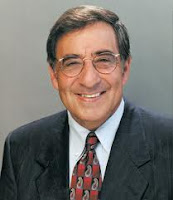 President Obama has selected Leon Panetta to replace Robert Gates as the next Secretary of Defense, but is is this the right choice at this critical juncture? It seems the president chose Panetta to be the next Secretary of Defense because of his experience as a Congressman, Director of Office of Management and Budget, and Chief of Staff to President Bill Clinton. This experience would be invaluable as the next Secretary of Defense will have to institute budget reductions throughout the Department of Defense.
Unfortunately, managing the Pentagon budget is only one aspect the Secretary of Defense needs to be involved in. Currently the Pentagon is going through a transformation in military strategy in where the current though process is moving away from conventional military strategy and embracing counterinsurgency and stability operations.
This new focus will determine what weapons systems and the size of the force, as the Defense Department moves forward in the decade to come.
In his stint as Director of the Central Intelligence Agency, Leon Panetta's record is hardly stellar. The current situation in the Middle East is a prime example of where the intelligence community failed to foresee or plan for the various contingencies now confronted by the U.S.
The president could have selected a number of more qualified candidates with more knowledge of defense and national security issues then make another political appointment like he made with his current national security advisor Thomas Donilon.
http://militarybriefingbook.com/browse.cfm?category=Defense%20Policy%20and%20Budget&subcategory=National%20Security
 Tomorrow it is expected that President Obama intends to shake up his national security team by replacing Leon Panetta as Director of CIA, and naming Panetta as Secretary of Defense. General David Petraeus, current commander of all forces in Afghanistan, will replace Panetta as the new Director of the CIA.
The president will also announce a new ambassador in Afghanistan by replacing current Ambassador Karl Eikenberry, who has had a tenuous time as ambassador with Ryan Crocker. Ryan Crocker served as ambassador to Iraq during the surge strategy implemented by the Bush administration, and worked effectively alongside Gen. Petraeus in stabilizing Iraq.
General John Allen, Deputy at U.S. Central Command, is the likely replacement for Gen.Petraeus in commanding all forces in Afghanistan.
The last change of the president's national security team is who will replace Admiral Mike Mullen, it looks like the president is leaning toward Gen. Cartwright, currently the Vice Chairman of the Joint Chiefs of Staff. General Raymond Odierno, who served under Gen. Petraeus in Iraq, is the likely choice for Vice Chairman of the Joint Chiefs of Staff.
This comes at a crucial time for the president as U.S. forces are slated to begin withdrawing from Afghanistan at the end of July.
http://militarybriefingbook.com/browse.cfm?category=Defense%20Policy%20and%20Budget&subcategory=National%20Security
 The United States currently is in a precarious situation with regard to the health of the nation's economy as it emerges from the deepest economic crisis since the Great Depression. Currently the country is facing rising fuel and food prices that are already being felt by the public and will have a great impact on business that we will witness in the coming months.
All levels of government across the U.S. have failed to implement sound economic polices that would revive the struggling U.S. economy. Washington is mired in partisan conflict over the size and scope of government, but nothing has been done to decrease unemployment in the country.
The president's own debt committee offered recommendations to reduce debt over the long term, but the president failed to enact even one of their reform measures, and instead travels across the country engaging in partisan campaigning.
Republicans, who now control Congress, have to leave partisan warfare behind and begin to address the lingering economic challenges faced by the country. A strong economy will mean more Americans working.
I can't tell you how many times we've discussed this issue, and at the risk of sounding like a broken record, Washington needs to stop partisan bickering and look at what is good for the nation; not each political party. Someone please forward these discussions to them, obviously they're not reading them or paying attention to what the people are saying.
http://militarybriefingbook.com/topic.cfm?topic=U.S.%20Politics
 Last month, as part of a concentrated military campaign, the U.S. participated along with N.A.T.O. in attacking Libyan forces to prevent a humanitarian nightmare from unfolding. A U.N. Security Council resolution allowed N.A.T.O. to use all measures in protecting the Libyan people.
Since U.S. operations began the president has repeatedly stated that the United States would only participate in a support role, and would allow other nations such as Britain and France to take a larger role in military operations. Once military operations began, the president has given conflicting signals as to what U.S. policy is in Libya, and for that matter in the broader Middle East.
On March 3rd, the president stated that Libyan leader Moammar Gadhafi must go, but has stated the goal of the United states since then is not the removal of the Libyan leader. U.S. strategy in Libya has been confusing and downright lacking in strategic depth. Senator John McCain, who visited Libya last week stated, the U.S. needs to do more to help the rebels.
Unfortunately neither the president or Sen. McCain have stated what role the U.S. would play in Libya once Gadhafi is removed from power. The president's policies in Libya look to maintain a stalemate, with the Libyan leader still in power.
As much as the president repeatedly states he will not pursue the foreign policy strategy of President Bush, the question must be asked- what is the president's strategy?
http://militarybriefingbook.com/browse.cfm?category=Africa&subcategory=North%20Africa
 With the successful operation that killed Osama bin Laden deep inside Pakistan, heated debate has opened on how much Pakistan knew about the whereabouts of the worlds most wanted terrorist.


